
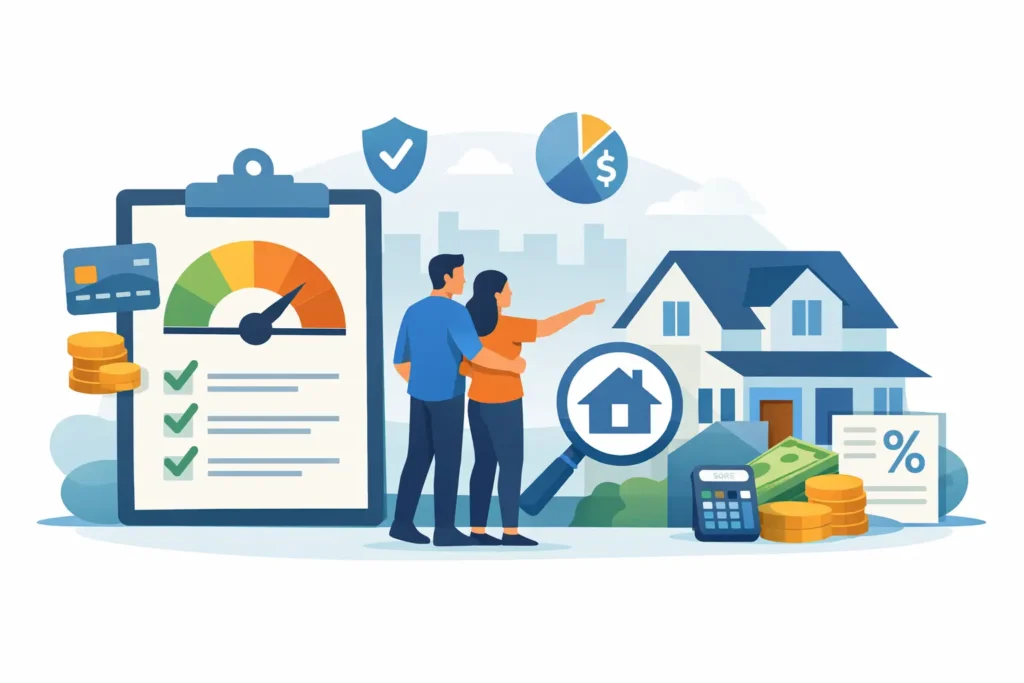
A home loan can cost you thousands more than expected if your credit is not ready when the lender pulls it. The top mortgage score factors are not a mystery, but they do require attention before you start making offers, applying for preapproval, or shopping for a rate. A few smart moves can strengthen your profile. A few avoidable mistakes can delay approval or raise your monthly payment.
What mortgage lenders actually review
Mortgage lenders do not approve a loan based on one number alone. They review your credit reports, your mortgage credit scores, income, debts, assets, employment, and the property itself. Still, credit is a major part of the decision because it helps determine whether you qualify and what interest rate you receive.
One common surprise: the score you see through a consumer app may not be the same score used for your mortgage. Many mortgage lenders use older FICO scoring models designed for mortgage lending. If you apply with a spouse or co-borrower, the lender commonly considers each person’s qualifying score rather than simply averaging both scores. In many conventional lending situations, the middle score for each applicant matters most.
That does not make consumer scores useless. They are helpful for spotting trends and monitoring your report. Just do not assume a score shown on an app is your final mortgage score. The information on your reports, especially balances, payment history, and negative accounts, is where preparation starts.
Top mortgage score factors that affect approval
Payment history comes first
Late payments can be especially damaging when they are recent, repeated, or 60, 90, or more days past due. A single late payment from years ago may not carry the same weight as a fresh pattern of missed bills, but a lender will still see it on your report if it remains there.
For a future homebuyer, the best move is simple: pay every account on time from this point forward. Set automatic payments for at least the minimum due, then verify that the payment actually posts. If you have an account that is already past due, bring it current as quickly as you realistically can. Do not ignore collection notices or assume an old balance will disappear on its own.
Credit card utilization can move quickly
Your utilization is the percentage of available revolving credit you are using. A card with a $1,000 limit and a $900 balance is 90% utilized. Even if you pay on time, high card balances can signal financial pressure and pull scores down.
For mortgage preparation, lower is generally better. Try to get overall revolving utilization below 30%, and lower still when possible. Pay attention to each card, not just the combined total. One nearly maxed-out card can hurt even when your other accounts have low balances.
This is one of the few top mortgage score factors you may be able to improve relatively fast. Credit card issuers usually report balances monthly, so paying balances down before the statement closes can reduce the amount reported to the bureaus. Do not drain your emergency savings just to chase a score. A mortgage requires cash for inspections, earnest money, moving, and unexpected costs. The right balance depends on your complete financial picture.
Negative accounts need a close review
Collections, charge-offs, repossessions, foreclosures, bankruptcies, and delinquent accounts can affect both your score and a lender’s underwriting review. Their impact depends on the type of account, amount, age, current status, and loan program. A small medical collection from years ago is not evaluated the same way as a recent unpaid charge-off or foreclosure.
Every negative item should be reviewed for accuracy. Look for incorrect balances, accounts that are not yours, duplicate collections, wrong dates, inaccurate late-payment reporting, or accounts that should show a different status. Accurate negative information cannot simply be wiped away because it is inconvenient. Anyone promising a guaranteed credit wipe is selling the wrong idea.
Credit repair is a process of identifying questionable or inaccurate reporting, disputing information when appropriate, and improving the positive side of your profile. It also takes time. If you want to buy a home this year, do not wait until a lender says no before opening your reports.
Age and account mix provide stability
Lenders and scoring models often favor a credit profile with a proven record of responsible borrowing. Older accounts, especially those with positive payment histories, help show that record. Closing an older credit card can reduce your available credit and may shorten the average age of accounts over time.
That does not mean you should keep every account open no matter what. A card with an annual fee you cannot justify may not be worth keeping. But avoid closing old, no-fee cards right before a mortgage application unless there is a clear reason to do so. Use them lightly, keep them paid, and monitor them for fraud.
A healthy mix of accounts can help, but do not open an installment loan just to add variety. A mortgage lender would rather see manageable accounts and steady payments than unnecessary debt created to manipulate a score.
New inquiries and new debt can change the file
Applying for new credit often creates a hard inquiry. Several inquiries can raise questions, particularly if they appear close to your mortgage application. New accounts can also lower the average age of your credit and increase your monthly debt obligations.
Mortgage and auto loan rate shopping is generally handled differently from applying for multiple unrelated credit cards, though the precise scoring treatment varies by model and timing. The practical rule is still clear: once you are preparing for a mortgage, avoid unnecessary applications.
Do not finance furniture, open a store card for a discount, co-sign for someone else, or lease a vehicle before closing without talking to your loan officer. That new payment may change your debt-to-income ratio even if your credit score stays strong. A lender can recheck credit before closing, so the work is not over when you receive preapproval.
Build a mortgage-ready credit plan
Start by reviewing all three credit reports well before you plan to apply. Check personal information, account ownership, balances, payment history, collection entries, public-record-related reporting where applicable, and recent inquiries. Save copies and write down what needs attention.
Next, prioritize the issues that are both harmful and realistic to address. Bring past-due accounts current when possible. Reduce credit card balances strategically. Challenge information that appears inaccurate or cannot be properly verified. Keep every current account current. If your file is thin, be careful about adding accounts too quickly. The right approach depends on whether you need a better score, a cleaner report, lower monthly debt, or all three.
Give changes time to report. Credit improvement is rarely an overnight event, and mortgage underwriting has rules that differ among conventional, FHA, VA, and other loan programs. A score target that works for one borrower may not be enough for another borrower seeking a different loan type, down payment, or debt level.
Paralegal Credit Fix helps consumers review damaging and questionable credit-report entries, understand utilization and payment issues, and create a practical plan before a major purchase. The process begins with a free report analysis so you can see what is affecting your profile instead of guessing.
Mistakes to avoid before closing
The weeks before closing are not the time for big financial changes. Keep your job and income documentation organized, avoid large unexplained deposits, and do not move money around without understanding what your lender may need to document. On the credit side, continue making payments on time and keep card balances low.
Also avoid paying off or settling an account blindly just because you want it gone. In some cases, resolving a debt is necessary or beneficial. In others, the reporting, timing, or documentation needs careful review first. Ask how a proposed action may affect your loan approval, your available cash, and the way the account will appear on your report.
Give yourself room to qualify
Better credit does more than improve a number on a screen. It can expand your loan options, reduce the interest you pay, and make the path to homeownership less stressful. Pull your reports early, address the facts, protect your on-time payment streak, and give your credit profile the time it needs to show your progress.