
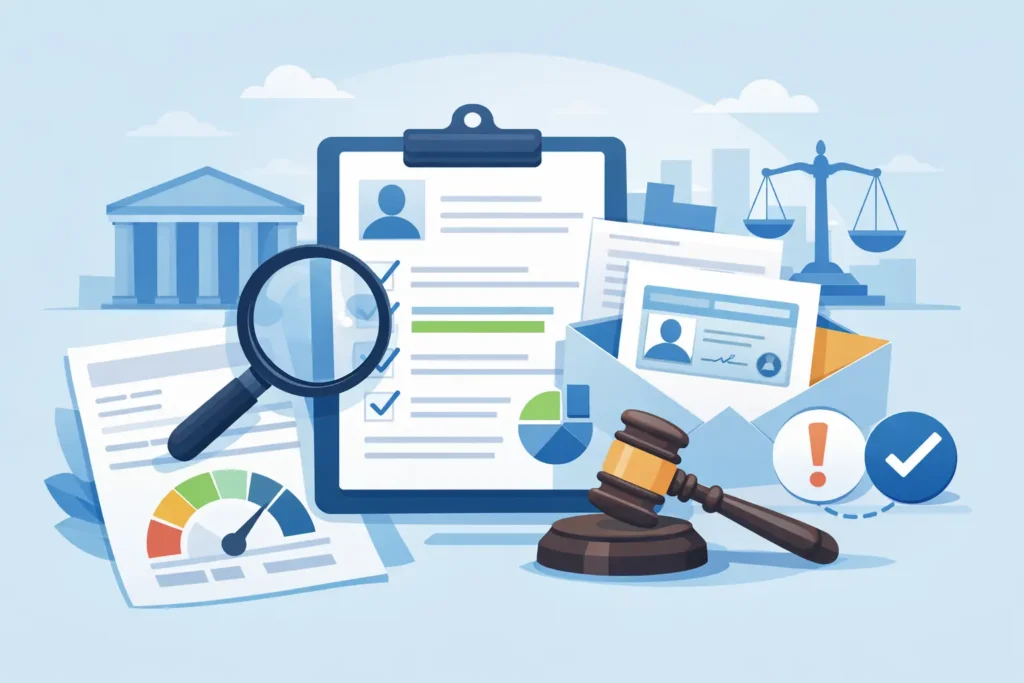
A credit dispute is only as strong as the proof behind it. The best dispute evidence documents do not need to be complicated, expensive, or packed with legal language. They need to clearly show what is wrong on your credit report and what the correct information should be.
If a collection, late payment, charge-off, inquiry, or account balance is inaccurate, incomplete, or cannot be verified, supporting documents can help the credit bureau and furnisher understand your position faster. Sending a vague letter that says “this account is not mine” may not get far. Sending a clear explanation with the right records gives your dispute a real foundation.
Why Evidence Matters in a Credit Report Dispute
Credit reports affect mortgage approvals, auto loans, credit card terms, insurance rates in some states, and the interest you pay over time. A negative item may be accurate, or it may be reporting the wrong date, balance, account status, ownership, or payment history. Those details matter.
When you dispute information, the credit reporting agency generally reviews the claim and asks the company reporting the account to investigate. Your documents give the reviewer something specific to compare against the information being reported. They also help prevent misunderstandings about which account or reporting detail you are challenging.
Evidence is not a magic eraser. Accurate negative information usually cannot be removed simply because it is hurting your score. That is the difference between credit repair and a so-called “credit wipe.” Credit repair focuses on reviewing reports, challenging questionable reporting, and improving the positive factors you can control. Anyone promising to erase legitimate debt overnight is not giving you the full picture.
Best Dispute Evidence Documents by Situation
The right document depends on the type of error. Do not send every financial record you own. Send copies of the records that directly support the specific issue, along with a short, clear explanation.
Accounts That Do Not Belong to You
For an account that is not yours, start with identification documents that establish your correct name and current address, such as a driver’s license, state ID, utility bill, bank statement, or insurance statement. If identity theft is involved, an identity theft report, police report, fraud affidavit, account statements, or correspondence with the creditor may also help.
Name mix-ups are more common than people realize. A similar name, former address, blended family file, or incorrect Social Security number can place someone else’s account on your report. Point out the account name, account number as shown on the report, and the exact reason it does not belong to you.
Incorrect Balances, Payment Status, or Account Dates
Billing statements are often among the strongest documents for balance and payment errors. Use statements showing the amount owed, payments received, payment due date, or account status. A payment confirmation, canceled check, bank transaction record, or receipt can support a claim that a payment was made on time.
For account dates, keep the records focused. A letter from the creditor, account opening documents, final statement, or settlement confirmation may show that the reported opened date, closed date, or delinquency timeline is wrong. This can be especially important with older collections and charge-offs, where incorrect dates may make a negative item appear newer than it is.
Paid Collections or Settled Accounts
If you paid a collection account or reached a settlement, keep the settlement agreement, payment receipt, zero-balance statement, and any written confirmation from the collection agency. These records can support a dispute when the account still reports an unpaid balance, an incorrect amount, or a status that does not reflect the resolution.
A paid collection does not always disappear from a credit report just because it was paid. The question is whether it is being reported accurately. If the collection agency agreed in writing to update or delete specific reporting, retain that agreement and submit a copy if the reporting does not match it.
Unauthorized Hard Inquiries
A hard inquiry can lower your score slightly and may concern a mortgage lender if several appear in a short period. For an inquiry you did not authorize, useful documentation may include correspondence with the lender, records showing you did not apply, an identity theft report, or confirmation from the lender that no application exists.
Be careful with this category. Some inquiries are connected to applications you started, co-signed, or allowed a dealer or lender to submit. If you authorized the credit check, disputing it as unauthorized may not work. Focus on inquiries that are truly incorrect or tied to fraud.
Bankruptcy, Foreclosure, Repossession, or Public Record Errors
Major derogatory items require precise documentation. Court filings, discharge papers, lender correspondence, repossession records, foreclosure documents, and account statements may be relevant depending on the error. For example, a bankruptcy may be listed under the wrong person, show the wrong filing date, or include accounts that should report differently after discharge.
These situations can be complex. Do not guess at the reporting rules or send documents you do not understand. A careful review can identify whether the issue is an actual reporting error, an account-status problem, or an item that is accurate but needs a score-improvement plan around it.
How to Organize Your Dispute Package
A clean dispute package makes it easier for someone to review your claim. Start with a copy of the credit report and circle or highlight the exact entry you are disputing. Your letter should identify the creditor or collector, the account number as it appears on the report, the specific error, and the correction you are requesting.
Then attach copies of your evidence in a logical order. Label them Exhibit A, Exhibit B, and so on if you have several pages. For example, Exhibit A may be the credit report page, Exhibit B a payment confirmation, and Exhibit C a creditor letter confirming the account was paid.
Do not send original documents. Keep your originals in a safe place. Also, protect sensitive information. You may redact account numbers, Social Security numbers, and other unrelated personal details as long as the remaining information still supports your claim.
If you submit by mail, keep a complete copy of what you sent and proof of delivery. If you submit online, save screenshots, confirmation numbers, and uploaded files. Good records help you follow up if the result is unclear or the item continues to report inaccurately.
Documents That Usually Do Not Help
More paperwork is not always better. A stack of unrelated bank statements, emotional explanations, or generic form letters can make a valid dispute harder to understand. The goal is not to overwhelm the bureau. The goal is to show a direct connection between the document and the error.
A credit report from a monitoring service can help you spot problems, but it may not be enough by itself to prove the information is wrong. Likewise, a verbal promise from a creditor is difficult to use later. Whenever possible, ask for written confirmation and keep it.
Avoid altering documents, creating documents, or disputing accurate accounts as fraud. Those choices can create bigger problems. Honest, targeted disputes are the right path.
Build Evidence Before You Need It
The best time to organize your records is before a mortgage application, car purchase, or urgent financing need puts you under pressure. Save account statements, payoff letters, settlement agreements, payment confirmations, and correspondence in one secure folder. Review your credit reports regularly so errors do not sit unnoticed for months.
At Paralegal Credit Fix, the first step is a free credit report analysis that helps you understand which items may be questionable and which credit habits may be holding your score back. A dispute may be part of the plan, but lowering credit card utilization, protecting on-time payments, and managing accounts carefully matter too.
Do not wait until a lender says no. Gather your records, identify the facts, and take the next clear step toward a credit profile that better reflects your real financial history.
Pingback: Credit Wipe vs Credit Repair: What Works? - Paralegal Credit Fix
Pingback: Dispute Resolution Timeline: What to Expect - Paralegal Credit Fix