
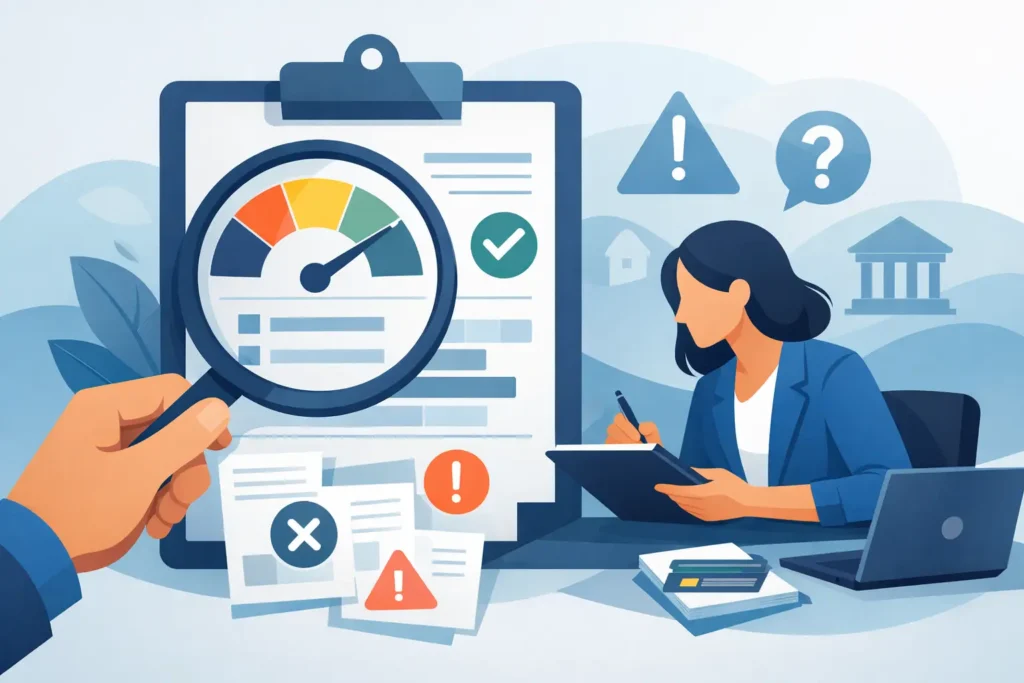
A mortgage lender says your score needs work. An auto dealer offers a rate that feels too high. A credit card application comes back denied. Before you guess at the reason, learn how to read credit reports and find the information lenders are actually seeing. Your report can show what is holding you back, what is helping you, and where fast action may make a difference.
A credit report is not just a list of old debts. It is a record of how your accounts, balances, payments, and applications are being reported. Read it carefully before you apply for a home loan, refinance, finance a vehicle, or open new credit. DON’T WAIT UNTIL IT’S TOO LATE.
Start With the Right Credit Reports
Your credit file may look different at each of the three major credit bureaus: Equifax, Experian, and TransUnion. A creditor may report an account to one bureau, two bureaus, or all three. That means an error or collection can appear on one report but not another.
Review all available reports, not just a credit score or a lender’s notice. Credit monitoring tools can be useful for seeing account activity and trends, but they may not show every detail or every bureau. When a major financial decision is ahead, compare the reports line by line.
As you read, keep a simple record of anything that looks wrong, unfamiliar, outdated, duplicated, or incomplete. Save the report date and take notes about the account name, account number, balance, and status. Details matter when you need to question reporting.
How to Read Credit Reports Section by Section
Most reports organize information into the same basic areas: personal information, accounts, collections, public records when applicable, and inquiries. The layout changes by bureau, but the questions you should ask stay the same.
Personal information
Check your name, current and previous addresses, employers, and other identifying details. A misspelled name or an old address alone does not always damage your score. Still, personal information you do not recognize can be a warning sign that another person’s file has been mixed with yours or that identity theft needs attention.
Look closely for unfamiliar names, addresses where you never lived, or employers you never had. Those items should not be ignored simply because they are in the “personal information” section.
Account information
This is usually the most important part of the report. It includes credit cards, auto loans, mortgages, student loans, personal loans, and other reported accounts. For every account, review the creditor name, opening date, current balance, credit limit or original loan amount, payment status, and payment history.
Start by separating open accounts from closed accounts. An open credit card with a $5,000 limit and a $4,500 balance may be hurting your score because utilization is high. The same card with a $500 balance is using far less of its available limit. In many cases, lowering revolving balances can help more quickly than waiting for an old negative item to age.
Then check the status. Terms such as “current,” “paid as agreed,” and “never late” are positive signs. Terms such as “30 days late,” “60 days late,” “charge-off,” “repossession,” or “settled” deserve a closer look. Do not assume a negative status is correct just because it appears on the report. Compare it with your own records.
Payment history may show individual late payments by month. One reported 30-day late payment can matter, especially if it is recent. Multiple late payments or a late payment that reached 60, 90, or 120 days can have a stronger effect. If the late mark is accurate, focus on building a clean payment record from this point forward. If it is inaccurate, document why.
Collections and charge-offs
Collection accounts often appear in their own section, although some reports also show the original creditor account. Check whether the collection company, original creditor, balance, and dates make sense. A collection should not be reported as a brand-new debt simply because it was sold or transferred. The dates and reporting history are worth examining carefully.
A charge-off means a creditor wrote the account off as a loss after serious nonpayment. It does not necessarily mean the balance disappeared. The original account and a collection account may both appear, but the reporting should accurately reflect what happened and should not create a misleading duplicate balance.
Never pay, settle, or ignore a collection based only on a quick glance at a report. The right approach depends on whether the debt is yours, whether the amount is accurate, the age of the account, your financial goal, and how the account is reporting. A homebuyer preparing for underwriting may need a different plan than someone rebuilding credit over the next year.
Public records and serious negative events
Depending on the report and the type of record, you may see information related to bankruptcies, foreclosures, or other serious financial events. These entries can affect lending decisions for years, but every situation has a timeline and context. Review filing dates, discharge dates, account statuses, and whether the item actually belongs to you.
Accuracy comes first. Legitimate negative information is not something anyone can simply “wipe” away because it is inconvenient. Credit repair is not a credit wipe. A responsible process reviews the report, challenges questionable or inaccurate reporting, and helps you improve the positive factors you can control.
Credit inquiries
Inquiries show when a business checked your credit. A hard inquiry may occur when you apply for a credit card, auto loan, mortgage, or certain other financing. Too many recent hard inquiries can raise concerns for lenders, particularly when they appear alongside high balances or late payments.
Make sure the inquiries are familiar. An inquiry you did not authorize may need attention. Also understand that checking your own credit generally does not hurt your score, and some rate-shopping activity may be treated differently by scoring models. Still, avoid applying for several new accounts when you are preparing to qualify for a major loan.
Find the Problems That Need Action First
Not every negative-looking item needs the same response. Prioritize based on potential impact and your immediate goal. A high credit card balance, an account incorrectly marked late, an unfamiliar collection, and a recent unauthorized inquiry are all worth attention, but the next step can be different for each one.
Focus first on errors and questionable entries. Check for accounts that are not yours, balances that do not match your records, payments reported late when they were on time, duplicate collections, wrong dates, or accounts that should show a different status. Keep copies of statements, payment confirmations, settlement documents, and correspondence that support your position.
Next, address score-management issues that are accurate. Pay every account on time. Bring revolving utilization down where possible, preferably before the statement date when balances may be reported. Do not close older credit cards just because they have a zero balance unless there is a clear reason to do so. Closing an account can reduce available credit and increase utilization.
Be careful with quick fixes. Opening several new cards to lower utilization can create more inquiries and lower the average age of your accounts. Paying off a collection may be the right financial decision, but its scoring impact depends on the scoring model, the account’s age, and how the creditor reports it. Better Scores. Bigger Savings. But real improvement comes from the right plan, not random moves.
What to Do When Information Is Wrong
If you find inaccurate or incomplete reporting, identify exactly what is wrong and gather your supporting documents. Your dispute should be clear and specific. State the account, the information you believe is inaccurate, and the correction you are requesting. Avoid broad claims that do not explain the issue.
Keep records of what you submit and when. Review later reports to see whether the information was corrected, verified, removed, or changed. If the response does not resolve a legitimate concern, you may need to review the evidence again and consider your next option.
For consumers who want help understanding a complicated report, Paralegal Credit Fix begins with a free, no-obligation analysis of your credit report. The goal is simple: identify damaging and questionable items, explain the positive factors you can build on, and give you a clear path forward.
Read Your Report Like a Future Lender
A lender is not only looking for one number. They are looking for patterns. Are balances close to the limit? Are payments consistently on time? Did several new accounts open recently? Is there unresolved collection activity? Is the file thin, or does it show years of responsible account management?
That is why reviewing your report once is helpful, but reviewing it regularly is smarter. A report can change when a balance updates, a creditor reports a late payment, an old account is sold, or a new inquiry appears. Catching a problem early gives you more options before a mortgage application or auto purchase is on the line.
Your credit report is a working financial record, not a permanent verdict. Read it with patience, question what does not add up, protect the positive accounts you already have, and take the next right action while there is still time to improve your options.
Pingback: How to Fix Missed Payment Damage on Your Credit - Paralegal Credit Fix
Pingback: Auto Financing: What Your Credit Score Changes - Paralegal Credit Fix
Pingback: Homebuyer Credit Readiness Guide for Approval - Paralegal Credit Fix
Pingback: Why Did My Score Drop? 8 Common Credit Reasons - Paralegal Credit Fix
Pingback: How to Dispute Duplicate Accounts on Your Credit Report - Paralegal Credit Fix
Pingback: Why Credit Scores Differ on Your Reports - Paralegal Credit Fix
Pingback: How to Establish Credit History the Right Way - Paralegal Credit Fix