
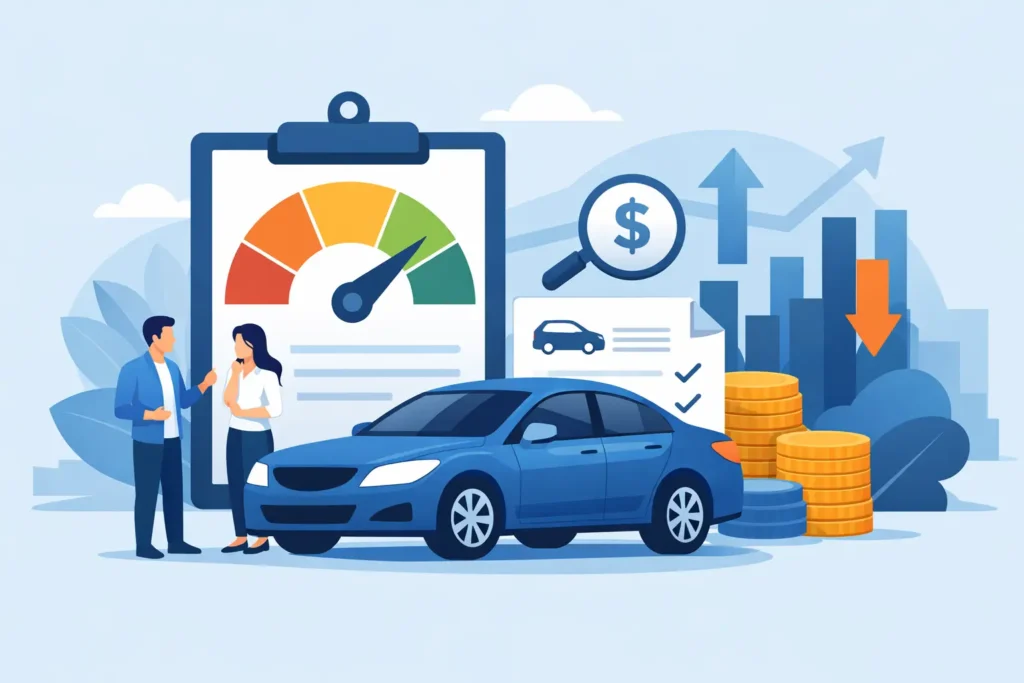
The car may have the right price on the windshield, but the loan can add thousands of dollars before you ever drive it home. Auto financing is not just about finding a vehicle you like. It is about what a lender sees when they pull your credit, how much they are willing to lend, and the interest rate they attach to the deal.
A low score does not always mean you cannot get approved. It often means you pay more for the same car, accept a larger down payment, or face a loan term that keeps you upside down longer. The good news is that many credit problems can be understood and addressed before you walk into a dealership.
How Auto Financing Really Works
When you apply for an auto loan, the lender is trying to answer one question: how likely is it that you will make every payment on time? Your credit score helps them make that decision quickly, but it is not the only factor. Lenders may also review your income, current debts, down payment, loan amount, vehicle age, and loan term.
Your score can affect whether you qualify, but it also affects the annual percentage rate, or APR. A borrower with stronger credit may qualify for a lower rate. A borrower with late payments, collections, charge-offs, a repossession, or high credit card balances may be offered a higher rate or more restrictive terms.
That rate matters. On a $30,000 loan, a difference of several percentage points can raise the monthly payment and the total amount paid over the life of the loan by thousands of dollars. The vehicle does not change. The cost of borrowing does.
Dealership financing can be convenient, but convenience should not replace preparation. Dealers may submit your application to multiple lenders, and each hard inquiry can appear on your credit report. Credit scoring models often treat multiple auto-loan inquiries made within a short shopping period as one rate-shopping event, but you should still ask how your application will be handled before signing anything.
What Lenders Look for Before Approving an Auto Loan
Credit scores are important, but lenders review the story behind the score. A report with one old late payment may be viewed differently than a report with several recent late payments and high revolving balances.
Payment history is a major concern. Recent missed payments can signal risk, especially if they appear on auto loans, credit cards, or installment loans. Collections and charge-offs can also make approval more difficult, depending on their age, amount, and whether the information is being reported accurately.
Credit utilization matters too. If your credit cards are close to their limits, your score may be lower than it needs to be, even if you have never missed a payment. Reducing reported balances before applying for auto financing can improve your profile. It does not require closing accounts or paying every card to zero. The goal is to lower the percentage of available credit you are using.
Lenders also consider your debt-to-income picture. A good score alone may not overcome a payment that is too large for your income. Before shopping, look honestly at the full monthly cost: the loan payment, insurance, fuel, maintenance, registration, and any warranty or add-on products. A lender may approve a payment that still puts pressure on your budget.
Problems on Your Credit Report Can Cost You at the Dealership
Do not wait until the finance office tells you there is a problem. Review all three credit reports before you start shopping. Look for accounts that are not yours, duplicate collections, incorrect late-payment histories, balances that do not match your records, outdated personal information, and inquiries you do not recognize.
Some negative items are accurate and may remain on your reports for a period of time. Others may be incomplete, outdated, or questionable. The difference matters. A legitimate credit-repair process reviews the report, identifies information that may need to be challenged, and helps you build stronger credit habits at the same time.
Be careful with anyone promising a fast “credit wipe” or claiming they can erase accurate negative information just because you paid for a service. Accurate reporting cannot simply be wiped away. Credit repair is different. It means reviewing your reports carefully, disputing questionable information through the proper process, and improving the positive factors you can control, including payment history and utilization.
If a repossession, bankruptcy, foreclosure, collection, or charge-off appears on your report, do not assume there is nothing you can do. Understand exactly what is reporting, whether the dates and balances are correct, and how it is affecting your current score. Getting clear on the facts is the first step toward making a better financing decision.
Prepare Before You Apply for Auto Financing
Start early if you can. Even a few weeks of focused credit management can make a difference, particularly when high credit card balances are holding your score down. Pay every account on time. If possible, make payments before statement closing dates so lower balances are reported to the credit bureaus.
Avoid opening new accounts right before applying for a vehicle unless there is a clear reason to do so. A new account and a hard inquiry can temporarily affect your score. Avoid closing older credit cards too, since closing an account can reduce your available credit and raise utilization.
Save for a down payment. A larger down payment may reduce the amount you need to finance, improve the lender’s view of the loan, and lower the risk of owing more than the car is worth. It also helps you avoid rolling old loan balances, taxes, fees, and expensive add-ons into a new loan whenever possible.
Know your budget before you fall in love with a vehicle. Focus on the out-the-door price and total loan cost, not only the monthly payment. A lower payment can be created by stretching the loan over more months, but a longer term usually means more interest and a greater chance of negative equity if you need to sell or trade the vehicle early.
Preapproval can give you a useful benchmark. It lets you compare a lender’s offer with dealership financing rather than accepting the first number presented. Compare APR, loan term, total finance charge, required down payment, and whether there is a prepayment penalty. Ask questions until the numbers make sense.
If You Need a Car Before Your Credit Is Ready
Sometimes waiting is not realistic. You may need reliable transportation for work, family, or medical appointments. If that is your situation, the goal is not perfection. The goal is to avoid a bad loan that creates an even bigger credit problem.
Choose a vehicle payment you can comfortably afford, not the maximum payment a lender approves. Consider a less expensive vehicle, a larger down payment, or a shorter period of credit improvement before applying if transportation allows. Be particularly cautious with offers that focus only on “guaranteed approval” while avoiding clear discussion of the APR and total cost.
If you accept a higher-rate loan because your options are limited, make a plan to improve your credit after the purchase. On-time auto payments can help build positive history. Lowering card balances, correcting questionable report information, and avoiding new unnecessary debt may put you in a better position to refinance later. Refinancing is not guaranteed, and fees or loan terms should be reviewed carefully, but it can be worth exploring once your profile improves.
Better Credit Gives You More Room to Choose
Auto financing should not feel like a mystery or a last-minute negotiation where you have no leverage. Your credit report is part of the deal, and you deserve to understand what it says before a lender uses it to price your loan.
Paralegal Credit Fix helps consumers review their credit reports, identify damaging or questionable reporting, and understand practical steps that may strengthen their credit profile. A free report analysis can help you see what needs attention before your next major financial decision.
Do not let an old mistake, a reporting error, or high revolving balances quietly raise the cost of your next vehicle. Get clear on your credit, make the changes you can control, and walk into the financing process prepared to ask for better terms.