
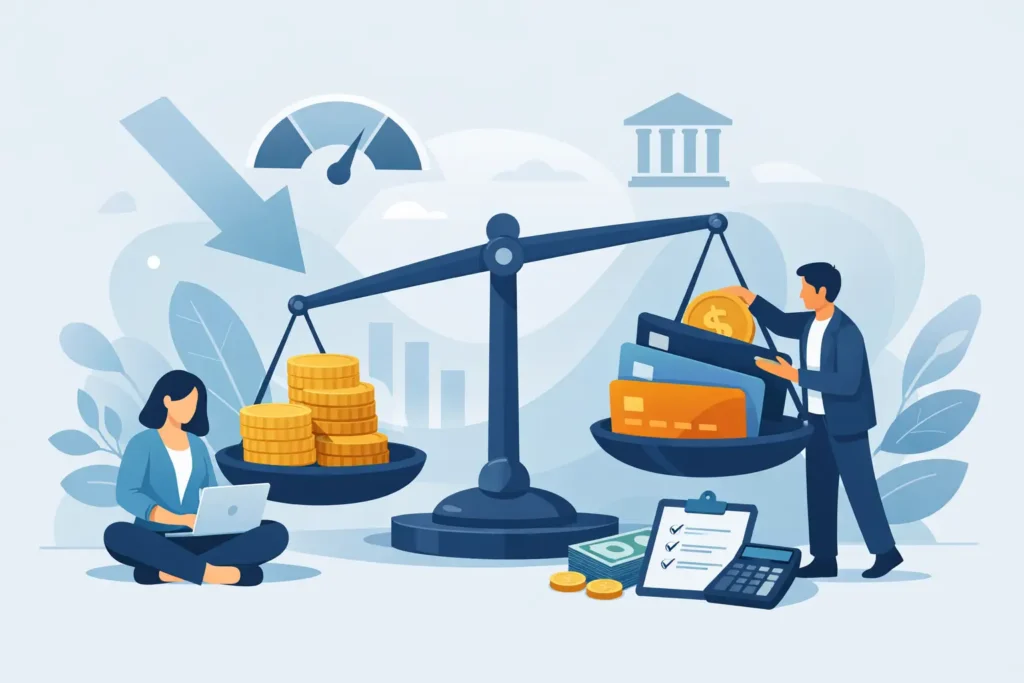
A credit card can show a balance even when you pay on time every month. That is why learning how to lower revolving balances matters before you apply for a mortgage, auto loan, or new credit card. Your payment history matters, but so does how much of your available credit appears to be in use when your accounts report to the credit bureaus.
High revolving balances can pull scores down, raise your debt-to-income concerns for lenders, and make an otherwise solid credit profile look stretched. The good news: utilization can often improve faster than many other credit factors. You do not need to close accounts or wait years to start making progress.
What revolving balances mean on your credit report
Revolving credit includes accounts that let you borrow, repay, and borrow again up to a credit limit. Credit cards and many store cards are the most common examples. Unlike an installment loan, such as a car loan with a fixed payment schedule, a revolving account can carry a different balance from one month to the next.
Credit scoring models look closely at credit utilization. This is the percentage of your available revolving credit that is currently being used. If you have a card with a $1,000 limit and a reported balance of $700, that card is using 70% of its available limit.
Both numbers matter: your utilization on each individual card and your total utilization across all revolving accounts. A person with one nearly maxed-out card can see score pressure even if their overall utilization looks reasonable. Lenders may view a high balance on a single card as a sign that cash flow is tight.
There is no magic percentage that guarantees a particular score. Still, lower is generally better, especially when you are preparing for financing. Keeping reported balances below 30% is a useful first target. Below 10% may be even more helpful for many consumers, provided you can pay the balance without creating a financial hardship.
Start with the balances that are hurting you most
Do not send small extra payments everywhere without a plan. Pull up every card account and write down the credit limit, current balance, interest rate, minimum payment, and statement closing date. This gives you a clear picture of where your money can make the biggest difference.
First, protect your payment history. Pay at least the minimum due on every account before putting extra money toward any one card. A new late payment can damage the progress you are trying to make with lower balances.
After minimum payments are covered, focus on cards that are close to their limits or above 50% utilization. Reducing a $500 balance on a card with a $600 limit may have a more visible utilization benefit than putting that same $500 toward a card with a $10,000 limit. This is especially true when you need your scores in better shape soon.
If interest costs are your biggest concern, the debt avalanche method can make sense. Put extra money toward the highest-interest card first while paying minimums on the rest. If motivation is the challenge, the debt snowball method may help you stay consistent by paying off the smallest balance first. Neither method is wrong. The best plan is the one you can follow every month without missing payments.
How to lower revolving balances before they report
Many people wait until the payment due date to pay their cards. That can avoid a late fee, but it may not lower the balance that gets reported. Credit card issuers often report the statement balance around the statement closing date, which can be several weeks before the due date.
Check each card statement for its closing date. Then make an extra payment before that date, particularly on cards with high utilization. For example, if a card has a $2,000 limit and a $1,400 balance, paying $900 before the statement closes may allow a much lower balance to report. You still need to pay any remaining statement balance by the due date to avoid interest when your account has a grace period.
This approach is sometimes called paying early or paying twice per month. It does not erase debt overnight, but it can help keep reported utilization lower while you continue your payoff plan. It is particularly useful in the months before a mortgage preapproval or vehicle financing application.
Keep in mind that reporting dates vary by issuer, and a payment made late in the day may not post immediately. Give yourself a few business days when timing matters. Review your statements instead of assuming every card reports on the same day.
Stop new charges from replacing your progress
Paying down balances while continuing to charge more than you repay creates a frustrating cycle. For a short period, use debit, cash, or a separate spending account for daily purchases if that helps you control card use. The goal is not to punish yourself. The goal is to stop revolving debt from growing while you bring utilization down.
A simple rule can help: do not charge an amount you do not already have a plan to pay before the next statement closes. If you use a card for groceries, gas, or recurring bills, make a payment soon after the purchase instead of waiting for a large month-end bill.
Also review automatic subscriptions and recurring charges. A forgotten streaming service or membership will not usually cause a credit crisis by itself, but several small charges can keep a high-balance card from moving in the right direction. Redirecting those charges to a checking account may make your card payoff plan easier to track.
Do not close cards just because they have a balance
Closing a credit card can reduce your available credit immediately. If the balance remains, your utilization percentage may jump. For example, closing a paid-down card with a $5,000 limit removes $5,000 of available credit from your profile, even if you never use the card again.
In most cases, it is better to pay the balance down, keep the account open, and use it carefully if there is no annual fee and the account is in good standing. An older account may also contribute to the overall age of your credit history.
There are exceptions. A card with a high annual fee, a difficult spending trigger, or an unfavorable relationship with the issuer may not be worth keeping forever. But make that decision after you understand the possible utilization impact, not in the middle of an urgent score-improvement effort.
Consider a credit limit increase carefully
A higher credit limit can lower utilization if your spending stays the same. If a $1,000 limit increases to $2,000 while the balance remains $300, utilization falls from 30% to 15%. That can be helpful, but it is not a substitute for reducing debt.
Before requesting an increase, ask whether the issuer will use a hard inquiry or a soft inquiry. A hard inquiry may have a temporary effect on your credit scores. Also be honest about your habits. More available credit can be useful for utilization, but it can create more debt if it becomes an invitation to spend.
Opening several new cards just to increase available credit is usually not the first move when you are preparing for a major loan. New applications can add inquiries and reduce the average age of your accounts. It may make sense in some situations, but the timing and your full credit profile matter.
Check that your reported balances are accurate
A balance that was paid down but still appears high on your report may simply be waiting for the next update. Give issuers time to report, then review all three credit reports for accuracy. Look for incorrect balances, duplicate accounts, outdated late payments, or accounts that do not belong to you.
Disputing questionable information is different from promising a so-called credit wipe. Accurate negative information cannot simply be erased because it is inconvenient. However, information that is incomplete, inaccurate, or cannot be verified deserves attention. Your credit report should reflect the truth, and you have the right to question reporting that does not.
If you need help understanding what is affecting your utilization and what other items may be holding your scores back, Paralegal Credit Fix can review your report and help you identify practical next steps.
Build a payoff amount into every paycheck
The fastest sustainable progress usually comes from making debt payoff a scheduled expense, not an occasional goal. Decide on a realistic amount from each paycheck and send it to the priority card as soon as you are paid. Even an extra $50 or $100 applied consistently can change the direction of a high-utilization account.
If money is tight, look for short-term sources of room in your budget: paused subscriptions, reduced dining out, a tax refund, overtime income, or the sale of unused items. Put windfalls toward principal instead of treating them as spending money. At the same time, keep enough cash for essentials so you do not have to put emergency expenses back on the cards.
Better scores are built through repeated decisions, not one perfect payment. Start with the card closest to its limit, pay before the statement closes when possible, and protect every due date. The next payment you make can be the point where your credit profile starts looking less burdened and more ready for the opportunity ahead.
Pingback: Homebuyer Credit Turnaround Examples That Matter - Paralegal Credit Fix