
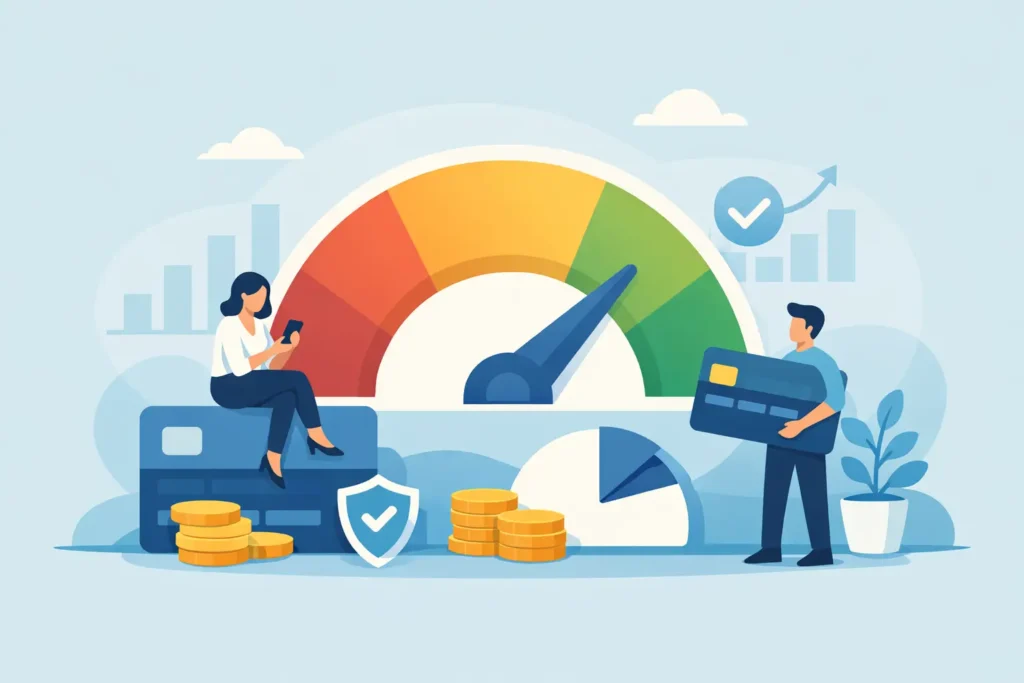
A credit card with a $1,000 limit can either help your score or quietly hold it back. To keep credit utilization under 25%, the balance that reports to the credit bureaus should generally stay below $250. That simple number can make a real difference when you are preparing for a mortgage, auto loan, apartment approval, or a better-rate credit card.
Utilization is one of the fastest credit factors you can improve because it is based largely on your current reported balances. You do not have to wait years for an old late payment to age off. You need a clear plan, the right payment timing, and enough room on your cards to avoid letting balances get too close to their limits.
What Credit Utilization Really Means
Credit utilization is the percentage of your available revolving credit that you are using. Revolving accounts include credit cards and lines of credit. Installment loans, such as an auto loan or mortgage, are handled differently and do not count toward your revolving utilization rate.
The basic calculation is straightforward:
Reported credit card balance ÷ credit limit × 100 = utilization percentage
If your card has a $2,000 limit and the reported balance is $400, your utilization on that card is 20%. If you have several cards, scoring models also look at your overall utilization. For example, $1,000 in total reported balances on $5,000 in total limits equals 20% overall utilization.
Both numbers matter. A person may have an acceptable overall ratio but still have one card nearly maxed out. That high balance can raise concern because it suggests you may be relying heavily on that particular account. Keep an eye on each card, not just the total.
Why Keep Credit Utilization Under 25%
There is no magic line where every score reacts exactly the same way. Credit scoring models consider your entire credit profile, including payment history, account age, negative items, and recent applications. Still, lower reported revolving balances generally create a stronger picture of how you manage available credit.
Keeping utilization below 25% gives you breathing room. It helps prevent a normal purchase, interest charge, or automatic subscription from pushing a card into a high-utilization range. For consumers actively trying to improve a score, aiming lower than 25% may produce better results, especially before a lender pulls your credit.
Do not confuse low utilization with never using credit cards. A card that is used carefully and paid on time can build positive history. The goal is controlled use, not fear of using your accounts. You can put regular expenses on a card, pay them down before the balance is reported, and still show responsible activity.
Your Due Date Is Not Always the Date That Counts
One of the most common mistakes is paying a card in full by the payment due date and assuming the bureaus will see a zero or low balance. The balance that appears on your credit report is often based on the statement closing date, not the due date.
Here is how that can hurt: Your card has a $1,000 limit. You charge $700 during the month, then wait until the due date to pay it off. If the statement closes while the $700 balance is still there, the issuer may report 70% utilization. You paid on time, but your credit report may still show a high balance until the next reporting cycle.
Check your card statement for its closing date. Make a payment several days before that date when possible. Payment processing can take time, and a weekend or holiday may delay posting. If you use the card throughout the month, consider making more than one payment. This is often called paying early or paying twice per month, and it can help keep the reported balance manageable without changing your spending plan.
A Practical Plan to Lower Your Ratio
Start with the numbers on your current credit report and your card accounts. Write down every revolving credit limit, current balance, statement closing date, and minimum payment. Then calculate your overall utilization and each individual card’s utilization.
Use these four steps to bring high balances down:
- Pay down cards closest to their limits first, even if another card has a slightly higher balance. Reducing a nearly maxed-out card can improve the way your profile looks.
- Make an extra payment before the statement closing date, not only by the payment due date.
- Put new charges on a lower-balance card if you must use credit, but do not treat unused available credit as extra income.
- Pause unnecessary card spending while you are paying balances down. A payoff plan only works if new charges do not replace the amount you paid.
If you can only make one extra payment, apply it where it will lower the most damaging utilization percentage. A $150 payment on a card with a $500 limit and a $450 balance may be more helpful right now than putting that same $150 toward a card with a $5,000 limit and a $500 balance.
Paying down debt takes discipline, but utilization can change quickly. Once the creditor reports a lower balance, many scoring models can respond without requiring you to wait for years of history to build.
Should You Close a Paid-Off Credit Card?
Usually, closing a paid-off card is not the best move if the account has no annual fee and you can manage it responsibly. Closing it removes available credit from your utilization calculation. That can cause your ratio to rise even when you have not charged another dollar.
Suppose you have two cards with $2,500 limits, for $5,000 in total available credit. You carry a $750 balance, which equals 15% utilization. If you close one paid-off $2,500 card, your total limit falls to $2,500. That same $750 balance becomes 30% utilization.
There are exceptions. If a card has an expensive annual fee, encourages overspending, or creates a real risk of missed payments, closing it may be the healthier financial choice. Better credit is valuable, but avoiding new debt and protecting your budget comes first. Consider whether a product change or a lower-fee option is available before making a final decision.
Do Not Chase a 0% Reported Balance on Every Card
Many people hear that utilization should be low and assume every card must report zero. That is not necessary. A zero balance is far better than a maxed-out balance, but reporting a small balance on one card while keeping the rest low or paid off can show active, controlled use.
The right target depends on your situation. If you are months away from applying for a mortgage, a very low reported balance may be worth the extra attention. If you are focused on paying off debt and keeping every account current, getting under 25% is a strong, practical milestone. Do not drain your emergency savings just to force a lower utilization number. A new emergency charge can put you right back where you started.
When High Utilization Is Not the Only Problem
High balances may be part of the issue, but they are not always the whole story. Late payments, collections, charge-offs, inaccurate account details, and excessive recent inquiries can also affect your approval odds and borrowing costs. Lowering balances will not erase legitimate negative information, and no honest company can promise a “credit wipe.”
Credit repair means reviewing your reports carefully, questioning information that may be inaccurate or incomplete, and building stronger habits going forward. It is not a shortcut around debts you legally owe. If your report feels confusing, a free credit report analysis from Paralegal Credit Fix can help you identify which items are hurting you and which steps may have the quickest impact.
Your next statement date is an opportunity. Check the balance that is likely to report, make the payment you can afford before it closes, and keep building from there. Better scores often begin with one controlled balance and one on-time payment at a time.
Pingback: Top Mortgage Score Factors Before You Apply - Paralegal Credit Fix
Pingback: Credit Score Range Guide for Better Borrowing - Paralegal Credit Fix
Pingback: How to Lower Revolving Balances Without Closing Cards - Paralegal Credit Fix
Pingback: Mortgage Approval Starts With Your Credit - Paralegal Credit Fix