
A mortgage lender can see a very different financial picture in a few seconds based on your credit scoring results. The same is true when you apply for an auto loan, apartment, credit card, or refinance. A stronger score can mean approval, a lower interest rate, and more choices. A weaker score can cost you thousands of dollars over the life of a loan.
The good news is that credit scores are not mysterious, permanent grades. They are calculated from information in your credit reports, and many of the factors behind them can be managed. The first step is knowing what your reports say and what needs attention.
What Is Credit Scoring?
Credit scoring is the process lenders use to estimate how likely you are to repay borrowed money. A credit score is a number generated from the data reported by creditors, collection agencies, and public-record sources to the major credit bureaus.
Most consumers are familiar with scores that range from 300 to 850. In general, higher scores give lenders more confidence. But there is no single score that every lender uses. Mortgage lenders, auto lenders, credit card companies, and landlords may use different scoring models or different versions of the same model. Your score can also vary depending on which credit bureau’s report is being used.
That does not mean you should chase every small score change. It means you should focus on the report habits that tend to matter across scoring models: paying on time, keeping balances manageable, protecting established accounts, and correcting information that may be inaccurate or incomplete.
The Factors That Shape Your Credit Score
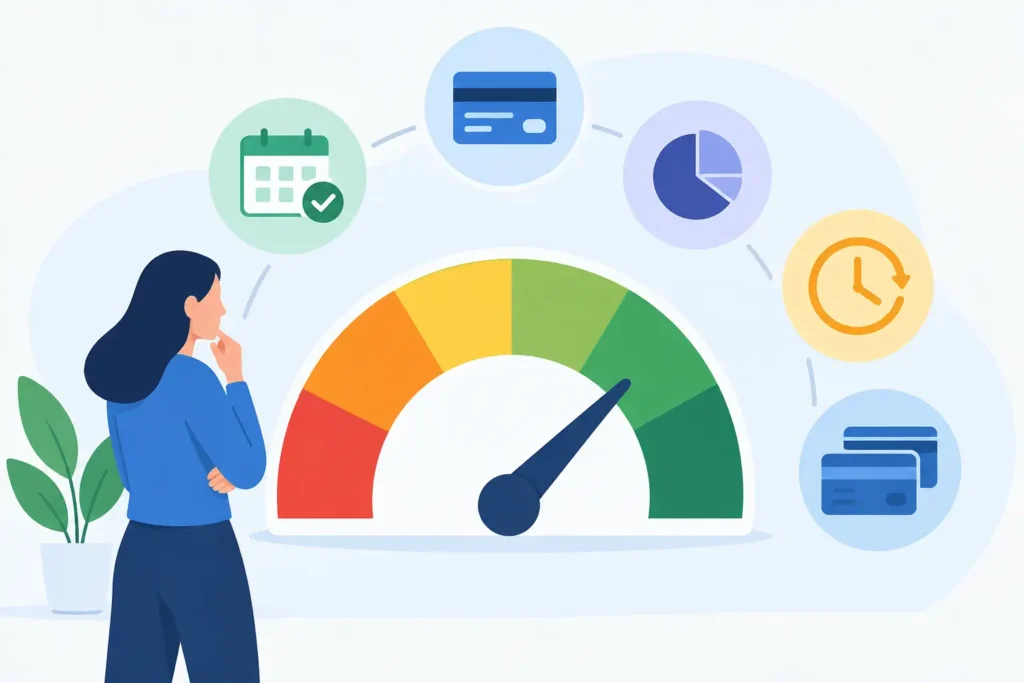
Your credit report tells the story. Credit scoring models turn that story into a number. While the exact formula is not public, these areas consistently have the biggest effect:
- Payment history: Late payments, collections, charge-offs, repossessions, foreclosures, and bankruptcies can damage a score. On-time payments help build it.
- Credit utilization: This is the percentage of available revolving credit you are using. A $900 balance on a card with a $1,000 limit is 90% utilization, which can hurt even if you pay the bill on time.
- Length of credit history: Older accounts can help show a longer record of managing credit. Closing an older card is not always the right move.
- Credit mix: Managing different types of accounts, such as revolving cards and installment loans, may help. You do not need to open unnecessary accounts just to create a mix.
- New credit activity: Several recent applications, new accounts, or hard inquiries can signal increased risk, especially when they happen close together.
Payment history and utilization often deserve immediate attention because they can have a meaningful effect on how lenders view your profile. Still, every file is different. A consumer with a thin credit file may need to build positive reporting, while someone with established accounts may need to lower balances or address questionable negative entries.
Why Utilization Can Change Credit Scoring Quickly
Many people assume that paying the minimum payment protects their score. It protects your account from becoming late, but it does not necessarily protect your score from high utilization.
If your credit cards are close to their limits, your reports can show that you are relying heavily on available credit. This may affect your score even when every account is current. Paying down revolving balances before the statement closing date can reduce the balance that gets reported to the bureaus.
There is no magic percentage that guarantees a certain score. Lower utilization is generally better, and keeping overall usage well below your total limits is a practical goal. Watch both your overall utilization and the balance on each individual card. One maxed-out card can be a problem even when your total utilization looks reasonable.
Do not close paid-off credit cards without considering the trade-off. Closing an account can reduce your available credit, which may raise your utilization. If the card has no annual fee and you can manage it responsibly, keeping it open may support a healthier profile.
Negative Items Matter, but Accuracy Matters Too
A negative item on a credit report is not automatically an error. If a late payment, collection, or charge-off is accurate and properly reported, it may remain for a period allowed by law. Anyone promising to erase every negative item regardless of the facts is selling a credit wipe fantasy, not responsible credit repair.
Credit repair is different. It means reviewing your reports carefully, identifying information that may be inaccurate, incomplete, outdated, duplicated, or unverifiable, and using the dispute process when appropriate. It also means building the positive habits that scoring models reward.
Errors happen. A collection may belong to someone else. A paid account may still show an unpaid balance. A late payment may be reported incorrectly. An account may appear more than once, or the dates and status may not make sense. These issues deserve a close review because inaccurate reporting can affect approvals and pricing.
Keep records of payments, settlements, account statements, and correspondence. If you dispute information, be specific about what you believe is wrong and why. Broad, vague disputes are less helpful than a clear review of the account details.
Hard Inquiries and New Accounts
A hard inquiry generally occurs when you apply for new credit. One inquiry is not usually a disaster, but repeated applications can add up. If you are preparing to buy a home or finance a vehicle, avoid applying for store cards, unnecessary credit cards, or other new credit products in the months leading up to your application.
Rate shopping can be treated differently than opening several unrelated accounts. For example, auto loan or mortgage inquiries made within a focused shopping period may be grouped by some scoring models. Even so, keep your shopping organized and avoid extending it longer than necessary.
New accounts can also lower the average age of your credit history. That does not mean new credit is always bad. A secured card or carefully chosen starter account may help someone with limited credit establish positive history. The key is opening credit with a purpose, not reacting to every offer that arrives in the mail.
A Practical Plan to Improve Your Credit Profile
Start with your actual reports, not assumptions. Review the personal information, account history, balances, payment status, collections, and inquiries. Look for entries you do not recognize and accounts that do not reflect your records.
Next, bring every current account current and protect it with automatic payments or calendar reminders. A single new late payment can be costly, especially if you are working toward mortgage approval. If cash flow is tight, contact creditors early. Waiting until an account is seriously behind limits your options.
Then make a balance-reduction plan. Focus on lowering high-utilization cards while continuing to make at least the required payment on every account. Avoid moving balances around without a clear plan, since opening a new account or using a promotional offer may have its own costs and timing concerns.
Finally, do not confuse activity with progress. Applying for more credit, disputing accurate accounts repeatedly, or closing cards impulsively can create new problems. Consistent, informed action is usually more valuable than a quick-fix promise.
When Professional Guidance Can Help
A credit report can be difficult to read when it includes multiple collections, charge-offs, late payments, or conflicting account details. It can be even more stressful when you are preparing for a mortgage, trying to qualify for better auto financing, or rebuilding after a financial hardship.
Paralegal Credit Fix helps consumers review their credit reports, understand damaging and positive factors, and identify questionable information that may warrant action. The goal is to make the process clear: know what is reporting, know what can be improved, and make decisions that support your financial goals.
Do not wait until a lender says no to find out what is on your reports. Pull your information, review it closely, and take the next right step. Better credit is built one accurate report, one on-time payment, and one lower balance at a time.