
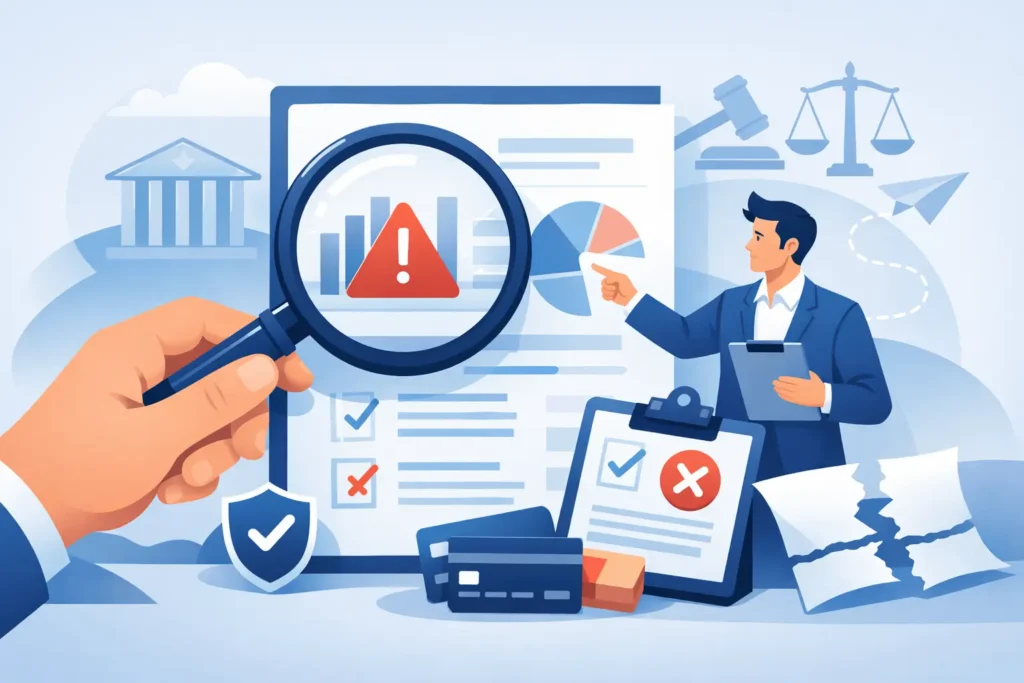
A collection account that is not yours, a late payment you made on time, or an account shown with the wrong balance can cost you real money. Knowing how to dispute reporting errors gives you a way to challenge inaccurate credit information before it affects a mortgage, car loan, credit card approval, or interest rate.
Do not assume the credit bureaus will catch an error on their own. Credit reports are built from information furnished by lenders, collection agencies, and other companies. Mistakes happen. The faster you identify a questionable item and send a clear, documented dispute, the faster you can protect your credit profile.
Start by Confirming What Is Actually Wrong
Before you dispute anything, review the entry carefully. A dispute works best when you can identify the exact error, not just say an account is hurting your score. Pull your reports from each major credit bureau because the information can differ from one report to another.
Look for incorrect personal information, accounts that do not belong to you, duplicate collections, wrong account balances, inaccurate credit limits, incorrect payment dates, and accounts listed with the wrong status. A paid collection, for example, should not be reported as currently unpaid. A closed account should not be shown as open if the reporting is misleading.
Some negative information may be painful but accurate. A legitimate late payment, charge-off, repossession, foreclosure, or bankruptcy cannot simply be removed because it is damaging your score. Be cautious of any company promising a “credit wipe.” Accurate negative information generally remains until it reaches the legal reporting time limit. Credit repair is about challenging information that is inaccurate, incomplete, unverifiable, obsolete, or reported in a misleading way – not making truthful history disappear.
How to Dispute Reporting Errors Step by Step
A strong dispute is organized, specific, and supported by documents. Sending a vague statement such as “remove this account” often creates delays or an incomplete investigation.
1. Mark the Exact Item and Error
Write down the name of the creditor or collector, account number as it appears on the report, and the bureau reporting it. Then explain the problem in one or two direct sentences. For example: “This account is reporting a 60-day late payment for March 2024. My bank record shows the payment cleared on March 12, 2024, before the due date.”
Do not dispute several unrelated issues in one confusing explanation. Each account and each error should be easy for the bureau to review.
2. Gather Your Proof
Your documents should support the specific correction you want. Depending on the issue, useful proof may include payment confirmations, bank statements, settlement letters, account statements, identity theft reports, court documents, correspondence from a lender, or a letter showing an account was paid or closed.
Send copies, not your originals. Keep a complete file of everything you submit, including the date, the documents enclosed, and any confirmation number. If you mail a dispute, use a delivery method that provides tracking. A paper trail matters if you need to follow up later.
3. Dispute With the Credit Bureau Reporting It
You can submit your dispute through the bureau’s online system or by mail. Online disputes can be convenient, especially for a simple clerical error. A mailed dispute may be better when the facts require a fuller explanation and several supporting documents.
State what you are disputing, why it is wrong, and what correction you are requesting. You may ask for an account to be deleted if it is not yours or cannot be verified. If the account is yours but the balance, payment history, or status is wrong, request that the bureau correct the specific information.
The bureau generally has 30 days to investigate, although the timeframe can vary in certain situations. It usually contacts the company that supplied the information and asks it to verify the reporting. The bureau should send you the results after the investigation is complete.
4. Dispute Directly With the Furnisher When It Makes Sense
The furnisher is the company that supplied the information – such as your credit card issuer, auto lender, mortgage servicer, or collection agency. You can also send that company a direct dispute with the same evidence.
This can be especially useful when you have clear documentation that the company can review quickly, such as a paid-in-full letter or proof of an on-time payment. Keep your wording professional and fact-based. The goal is to give the company what it needs to correct its reporting, not to argue about an account without evidence.
What Happens After You File a Dispute?
There are several possible outcomes. The bureau may delete the item, correct the information, verify it as accurate, or update it in another way. A deletion can help your score, but the impact depends on the rest of your report. If a correction lowers your reported credit card balance, for example, your utilization may improve and your score may respond positively.
If the bureau says the account was verified but you still believe the information is wrong, do not stop there. Review the investigation results against your records. You may submit additional evidence, dispute directly with the furnisher if you have not already done so, or request that a brief statement of dispute be added to your file. In cases involving identity theft, fraud, or serious reporting problems, you may also need to take additional consumer-protection steps.
A dispute is not a pause button for legitimate debt. If you owe a current balance, continue making required payments while the dispute is pending. Missing payments during the process can create new negative reporting and make the situation worse.
Avoid Mistakes That Can Slow Down Your Dispute
Do not send the same broad dispute to every bureau if only one report contains the error. Do not claim an account is fraudulent if it is actually yours. And do not challenge every negative item just because it is negative. Credit bureaus and furnishers need enough detail to investigate a real reporting issue.
Timing matters, especially if you plan to buy a home or refinance soon. Mortgage lenders review more than your score. They may ask for explanations, updated documentation, or proof that a disputed account has been resolved. Start reviewing your credit well before you apply for financing. Waiting until you are under contract can limit your options and add pressure to an already stressful process.
While your dispute is being reviewed, focus on the factors you can control. Pay every bill on time, keep revolving card balances low compared with their limits, avoid opening unnecessary new accounts, and check for new updates on your reports. A correction can help, but steady positive account management is what gives your score staying power.
When Professional Help Can Be Worth It
A simple reporting typo may be easy to handle yourself. But multiple collections, charge-offs, mixed files, identity theft concerns, or conflicting information across reports can be harder to organize. That is when experienced guidance can save time and help you understand which items are genuinely questionable and which score-building steps should come next.
Paralegal Credit Fix begins with a free credit report analysis to help consumers identify damaging and questionable entries, understand utilization and payment issues, and choose a practical path forward. We keep it simple: review the facts, challenge reporting that does not belong or does not add up, and build stronger habits around the accounts you control.
Your credit report is too connected to your financial goals to leave unreviewed. Pull it, read it line by line, and act on errors with proof and purpose. One corrected item may not solve everything, but it can be the move that puts a better rate, a better approval, or a fresh financial start back within reach.
Pingback: Best Dispute Evidence Documents for Credit Reports - Paralegal Credit Fix
Pingback: Debt Collection: What to Do When It Hits Your Report - Paralegal Credit Fix
Pingback: Credit Monitoring vs Repair: What Helps Most? - Paralegal Credit Fix