
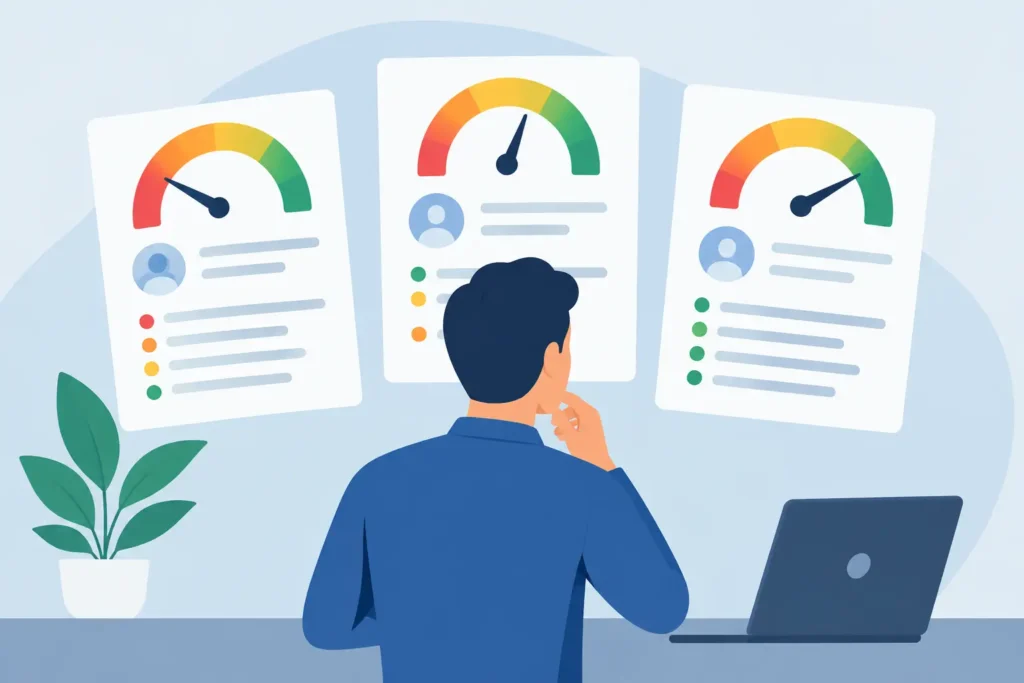
You check one credit app and see a 641. Then a lender tells you your score is 612. Before you assume someone made a mistake, understand this: there are legitimate reasons why scores differ. The number is not pulled from one permanent, universal credit-score file. It depends on the credit report used, the scoring model applied, and the day the score was calculated.
That difference can matter when you are preparing to buy a home, finance a vehicle, apply for a credit card, or qualify for better interest rates. The good news is that the same habits that strengthen your credit profile can help across scoring models: accurate reporting, on-time payments, low revolving balances, and smart account management.
Why Scores Differ From One Credit Source to Another
Credit scores are calculated from information in your credit reports, but not every company has the same information at the same time. The three major credit bureaus – Equifax, Experian, and TransUnion – maintain separate files. A creditor may report to all three bureaus, only one bureau, or two of the three.
For example, a credit card account could show a $300 balance on one report and a $900 balance on another because the bureaus received updates on different dates. A collection account may appear on one report but not another. Even one late payment, high balance, or inaccurate item can affect a score.
This is why reviewing all available report information matters. If you only look at one version of your credit file, you may miss an account that a mortgage lender or auto lender sees.
Your score can change from day to day
Credit scores are not fixed. They move as creditors update balances, payment history, account status, and other information. A card issuer may report your balance before you make a payment, even if you pay the card in full a few days later. That reported balance can temporarily raise your credit utilization and lower your score.
Utilization is the percentage of your available revolving credit that you are using. If you have a $5,000 total credit limit and report $2,500 in card balances, your utilization is 50%. Lowering that reported balance can make a meaningful difference, especially when you are close to a lending decision.
A score you checked last month is not necessarily the score a lender will see today. That is why waiting until the day before applying for a mortgage or car loan is risky. Give yourself time to review, correct, and improve what you can.
Different Scoring Models Produce Different Numbers
Another major reason credit scores differ is that there is more than one scoring model. FICO and VantageScore are two widely used scoring systems. They review similar credit-report factors, but they do not calculate risk in exactly the same way.
Some free credit-monitoring services provide a VantageScore. Many lenders, including mortgage lenders, may use one or more FICO scores. A score shown in an app can be useful for tracking trends, but it may not be the same score used in your actual loan approval.
There are also industry-specific score versions. An auto lender may use a score designed to evaluate auto-loan risk. A credit card issuer may use a version that weighs certain patterns differently. Mortgage lending can involve specific FICO score versions and may require scores from more than one credit bureau.
This does not mean the score you see is worthless. It means you should use it as a signal, not a guarantee. If your score rises after you lower balances and make on-time payments, that is progress. Just do not assume every lender will see the exact same number.
The Lender May Use More Than One Score
When you apply for a major loan, the lender’s process may be different from what you expect. A mortgage lender commonly reviews credit information from multiple bureaus and follows lending guidelines that do not apply to a basic credit-card application.
For many mortgage applications, lenders focus on the middle score when three scores are available. If two borrowers apply together, the lender may use the lower middle score for qualification purposes. That can be frustrating, but it makes it even more important to identify weak areas before starting the homebuying process.
A 20-point difference may be caused by nothing more than a different bureau file or scoring model. A larger gap deserves a closer look. It could point to a collection, late payment, charge-off, inquiry, or high balance appearing on only one report.
What Can Cause a Bigger Score Gap?
Small score differences are common. Significant differences may mean there is something specific to investigate. Start by comparing the accounts, balances, dates, and negative items listed on each report.
Look closely for these issues:
- A collection, charge-off, repossession, foreclosure, or bankruptcy reported to only one or two bureaus.
- A late payment that is missing from one report or reported differently on another.
- Credit card balances that are much higher on one report because of reporting timing.
- Duplicate accounts, incorrect account status, wrong balances, or accounts that do not belong to you.
- Hard inquiries that appear on one report but not the others.
Not every difference is an error. A creditor is not required to report to every bureau, and reporting schedules vary. But information that is inaccurate, incomplete, outdated, or not yours should be reviewed carefully. Questionable reporting can hurt your ability to qualify for the financing you need.
Focus on the Report, Not Just the Number
Consumers often chase a score without looking at the information creating that score. The score is the result. Your credit report is where the work begins.
Start with payment history. Bring current accounts current and protect every due date going forward. One new late payment can damage progress, particularly when your credit file is already thin or challenged. Set reminders or automatic payments for at least the minimum payment when possible.
Next, address revolving utilization. Paying down credit cards before the statement closing date may reduce the balance that gets reported. Do not close older credit card accounts simply because they have a zero balance unless there is a clear reason to do so. Closing accounts can reduce available credit and increase utilization.
Then review negative and questionable entries. A legitimate negative item is not a magic eraser situation. No honest company can promise to “wipe” accurate, current credit history from your report. Credit repair is different. It involves reviewing report information, identifying questionable or inaccurate entries, disputing information when appropriate, and building better habits around the accounts that remain.
Do Not Apply for New Credit Just to Test Your Score
When people see a lower-than-expected score, they sometimes apply for several cards in hopes of increasing available credit quickly. That can backfire. New applications may result in hard inquiries, and opening multiple new accounts can make a lender question whether you are taking on too much debt.
It depends on your full situation. A well-managed new account may help over time, particularly if it improves utilization and payments stay on track. But if you plan to apply for a mortgage, auto loan, or other major financing soon, avoid making moves without understanding the possible impact.
The better first step is usually to review what is already reporting. You may have an error to challenge, an old balance to reduce, or a payment pattern to strengthen before opening anything new.
When to Get a Professional Credit Review
If your reports contain collections, charge-offs, late payments, repossessions, bankruptcies, foreclosures, or accounts you do not recognize, guessing is expensive. A clear review can help you understand which items are affecting your profile, which information appears inconsistent, and what actions make sense before you apply for financing.
Paralegal Credit Fix offers a free, no-obligation credit report analysis to help consumers identify damaging items and understand the positive factors that can support stronger scores. The goal is simple: know what is on your report, know what can be addressed, and stop letting surprises show up when you need credit most.
Better scores do not come from watching a number refresh on an app. They come from taking control of the report behind it. Review your information early, question what does not look right, keep balances manageable, and give your positive payment history time to work for you.