
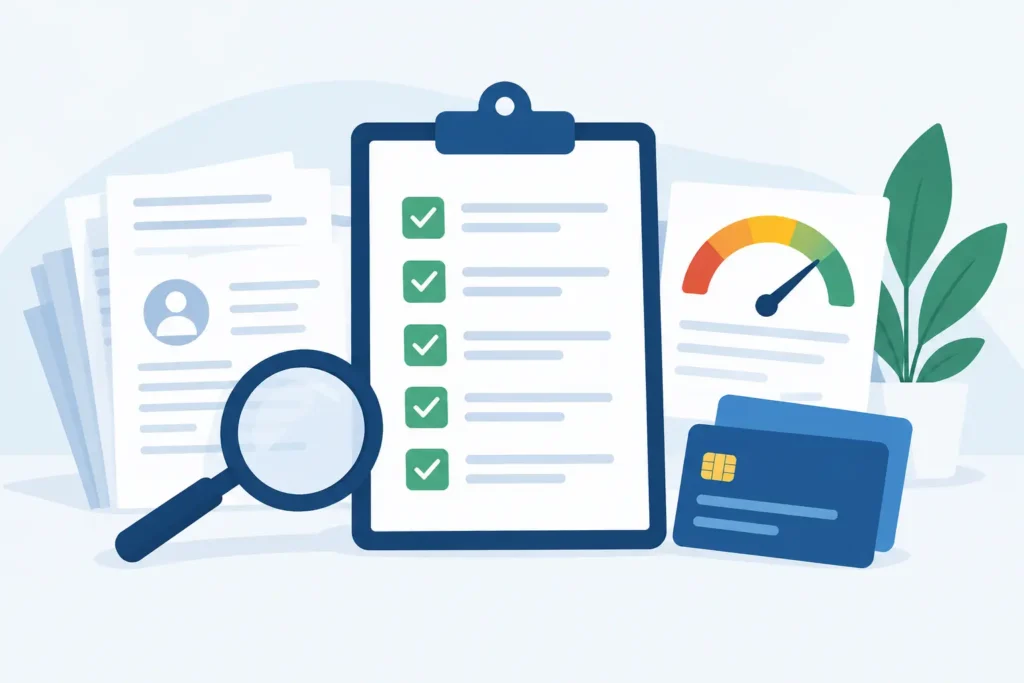
A credit dispute can be delayed or denied before anyone reviews the real issue if the paperwork is incomplete. Your dispute document checklist is what turns “this account is not mine” or “this balance is wrong” into a clear, supported request for an investigation. Better organization can save time, prevent repeat submissions, and help you stay focused on the information that is actually hurting your credit.
At Paralegal Credit Fix, we keep it simple: start with the report, identify what is questionable, and gather records that support the facts. You do not need a shoebox full of papers. You need the right documents, matched to the specific item you are disputing.
Start With the Exact Credit Report Entry
Before gathering proof, pull up the credit report showing the problem. Credit reports from the three nationwide credit bureaus can contain different information, account numbers, dates, balances, and status details. An item appearing on one report may not appear on another.
Save or print the report and clearly mark the entry you want investigated. Write down the creditor or collection agency name, the account number as shown on the report, the reported balance, the date opened, the status, and any late-payment history listed. If the report includes an error code or reason code, keep that too.
This step matters because a dispute should be specific. “Please remove my bad credit” is not a dispute reason. “This collection account does not belong to me” or “The reported balance does not match my final paid statement” gives the bureau and furnisher a defined issue to review.
Your Core Dispute Document Checklist
Most disputes begin with a small set of basic documents. Keep copies of everything you send and avoid mailing your only original records.
- A copy of the credit report with the disputed item clearly marked
- A copy of a current government-issued photo ID, such as a driver’s license or state ID
- Proof of your current address, such as a utility bill, bank statement, lease statement, or insurance statement
- A written dispute letter or online dispute explanation that identifies each error and states what needs to be corrected
- Copies of documents that support your position, such as statements, receipts, letters, court records, or identity theft records
- A dated record of what you submitted, where it was sent, and any confirmation or tracking information
Your identification and address documents help the bureau confirm it is reviewing the correct consumer file. Your marked report and written explanation help connect your evidence to the right account. Missing any of these basics can create unnecessary back-and-forth.
Match Your Documents to the Type of Error
The strongest documents depend on what is wrong. One account may have several problems, but do not assume every problem needs the same proof.
Accounts That Are Not Yours
If you see an account, inquiry, collection, or address that does not belong to you, gather documents that show the mismatch. This could include proof of your correct address history, account statements showing a different account number, or correspondence from the creditor confirming you were never the account holder.
If identity theft is involved, retain any identity theft report, police report if you made one, fraud alert confirmation, and records of your communications with the creditor. Identity theft disputes can require additional steps, so clear documentation is especially valuable.
Incorrect Balance, Payment Status, or Account Dates
For a wrong balance, payment amount, late payment, date of first delinquency, account opening date, or paid status, look for records created close to the event. Monthly statements, payoff letters, payment confirmations, canceled checks, bank transaction records, settlement letters, and creditor emails can all help.
For example, if a charge-off is reporting a balance after you paid a settlement, your settlement agreement and proof of payment may support a request to update the balance or status. If a late payment was reported when your bank records show the payment cleared before the due date, include the billing statement and payment evidence together.
A bank transaction by itself may not explain which account was paid. Pair it with the statement, confirmation number, or creditor letter that connects the payment to the specific account.
Duplicate Collections or Duplicate Accounts
A duplicate listing can make one debt look like two. Compare the account numbers, original creditor, dates, balances, and collection agency names. Keep documents that show the accounts refer to the same obligation or that one account was transferred, paid, or closed.
Be careful here. A collection agency account and the original creditor account may both appear on a report, and that does not automatically mean there is an error. The details matter. A review should focus on whether each account is being reported accurately, not simply whether the history is negative.
Bankruptcy, Foreclosure, Repossession, or Court Records
Public-record and major derogatory items can carry serious weight with lenders, especially when you are preparing for a mortgage or auto loan. If the report lists the wrong case number, filing date, chapter, status, or person, collect the relevant court docket, discharge paperwork, creditor notice, or official case document.
Do not send an entire court file when one or two pages prove the point. Send only the pages that identify you, the case, and the incorrect detail. Keep personal information protected where possible, while leaving enough information visible for the record to be verified.
Credit Inquiries You Did Not Authorize
For an inquiry you do not recognize, first consider whether it could be connected to a recent application, preapproval, auto dealer visit, apartment screening, or account review. If it truly was not authorized, gather any application history, fraud records, or creditor correspondence that supports your claim.
Not every inquiry affects your score the same way, and some inquiries may not be visible to lenders. Still, unauthorized hard inquiries deserve attention because they can signal a larger identity or reporting issue.
Write a Clear, Focused Dispute Explanation
Your documents should not have to tell the whole story by themselves. In your letter or dispute explanation, name the company reporting the information, identify the account as it appears on the report, describe the error, and state the correction you are requesting.
Keep the language factual. For example: “The account is reported with a $1,240 balance. Attached is the creditor’s paid-in-full letter dated March 4, 2026. Please investigate and update the balance and account status to reflect the documented payment.”
Avoid broad statements, emotional arguments, or copied dispute language that does not match your records. The goal is accuracy, not drama. A short explanation tied directly to evidence is usually stronger than a long complaint with no documentation.
Keep a Paper Trail After You Submit
Create one folder for each disputed account. Store your credit report, letters, attachments, submission confirmations, mailing receipts, responses, and notes from phone calls. Write down dates, names, reference numbers, and what was discussed.
Credit reporting disputes generally receive a response after an investigation period, but timing can vary based on the circumstances and how the dispute was submitted. Review the results carefully. A response that says an account was “verified” does not necessarily explain every detail you raised. Compare the updated report against the documents you sent.
If the information is corrected or removed, save the updated report. If it remains and you still have credible evidence of an error, you may need to submit a more targeted dispute, contact the company furnishing the information directly, or get guidance on your next step.
Know the Difference Between Credit Repair and a “Credit Wipe”
A legitimate dispute process is not a promise to erase every negative item. Accurate negative information can remain on a credit report for the applicable reporting period, even when it is inconvenient or expensive. Anyone promising a fast “credit wipe” regardless of the facts should raise questions.
Real credit repair is about reviewing your reports, challenging information that is inaccurate, incomplete, outdated, or not properly verified, and improving the positive factors you control. That includes on-time payments, lower revolving utilization, careful account management, and avoiding unnecessary new applications.
For a homebuyer, this distinction can be the difference between waiting for a score change and taking a focused, documented step that supports a mortgage timeline. For a real estate agent or mortgage broker, it means helping clients understand that credit improvement works best when errors are addressed early, not days before underwriting.
Do Not Wait Until the Loan Application Is Close
The best time to organize your documents is before you are under pressure to qualify for a home, car, or better-rate credit card. Start with the errors you can clearly document, then build healthier credit habits around the accounts that are accurate.
A well-prepared dispute is not about sending more paperwork. It is about sending the right paperwork with a clear reason. Get organized, keep your records, and take the next step with facts on your side.