
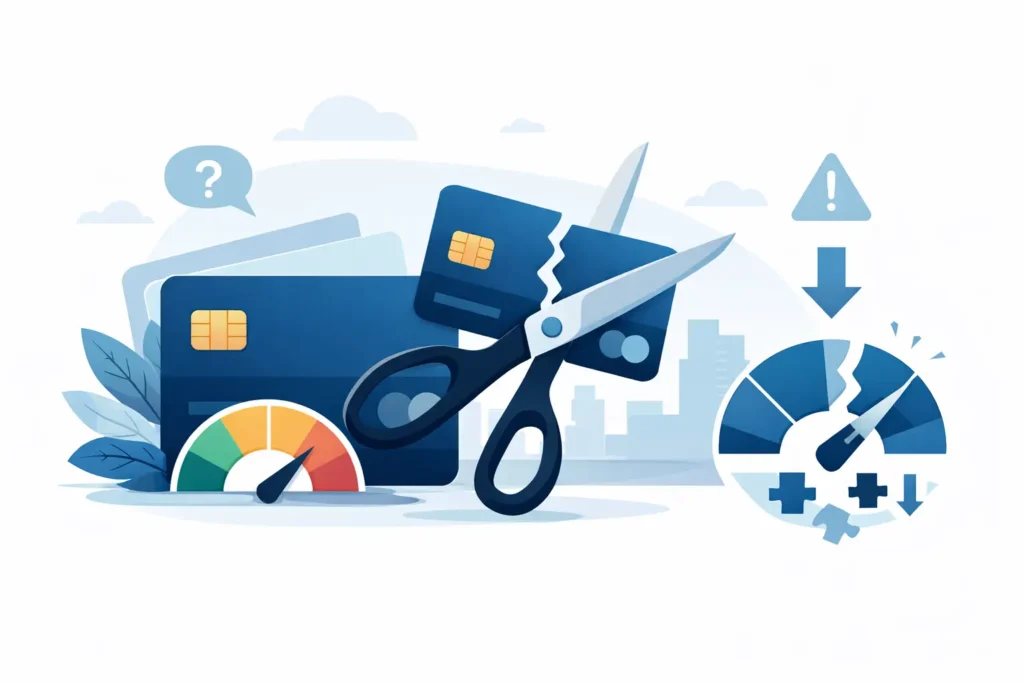
A credit card with a zero balance can feel like clutter. Maybe it has an annual fee, a low limit, or a tempting available balance you do not want to use. But does closing cards hurt credit? It can – especially when closing the account raises your credit utilization or removes an older account from your active credit strategy.
The right move depends on the card, your overall credit profile, and what you plan to do next. If you are preparing to buy a home, finance a vehicle, or apply for new credit, do not make account changes without understanding the possible score impact first.
Does Closing Cards Hurt Credit Scores?
Closing a credit card does not automatically lower your score. However, it can change the information used to calculate your score in ways that may hurt it. The biggest immediate concern is usually credit utilization – the percentage of your available revolving credit that you are currently using.
For example, imagine you have two cards with a combined $10,000 credit limit and a total balance of $1,000. Your utilization is 10%, which is generally a healthy level. If you close a card with a $5,000 limit, you now have $5,000 in available credit while still carrying $1,000 in balances. Your utilization jumps to 20% without you charging another dollar.
That higher utilization can make your credit profile look riskier to lenders. A score change may be small for one person and significant for another. There is no universal point drop, but the risk is real when balances are already high or your file has limited positive history.
Your available credit matters
Credit utilization is measured both across all your revolving accounts and on individual cards. Keeping balances low is one of the fastest ways to support a stronger score. Many consumers aim to stay below 30%, but lower is usually better when you are trying to qualify for the best possible terms.
Closing a card reduces the available credit in the equation. That is why a paid-off card can still be useful, even if you rarely use it. Its limit may help keep your overall utilization low.
What Happens to Credit History When You Close a Card?
A common concern is that closing an old card immediately erases years of good payment history. That is not usually how credit reporting works. A closed account in good standing can generally remain on your credit reports for years and continue contributing to your credit history during that time.
Still, closing an older account can create a problem later if it means your remaining active accounts are much newer. Lenders often want to see that you can manage credit responsibly over time. If your oldest card is also your highest-limit card, closing it may take away two valuable strengths: a long-standing account and available revolving credit.
This is particularly important for consumers rebuilding after late payments, collections, charge-offs, or a bankruptcy. Positive, established accounts can help demonstrate that your current financial habits are stronger than past problems. Do not close one just because the balance is zero.
Closed accounts can also affect your credit mix
Credit scoring models look at several parts of your profile, including payment history, amounts owed, age of accounts, new credit, and the types of credit you use. Credit cards are revolving accounts, while auto loans, mortgages, and personal loans are installment accounts.
Closing one card will not usually destroy your credit mix. But if it is your only revolving account, it can leave your report with less active revolving-credit history. That can matter more for someone with a thin file than for someone with several well-managed cards and loans.
When Closing a Card May Make Sense
Keeping every card forever is not always the answer. Sometimes closing an account is the smartest financial decision, even if there is a short-term credit trade-off.
A card with a high annual fee that provides no real value may not be worth keeping. If the issuer will not downgrade you to a no-fee version, closing it can be reasonable. The same is true if the card has become a spending trigger and keeping it open makes it harder to control debt.
You may also want to close a card after a divorce, a business separation, or an identity-theft concern. If a joint account is involved, remember that you may need to pay the balance and have the account formally closed or removed according to the card issuer’s process. Do not assume an informal agreement protects your credit report.
If you choose to close a card, try to pay down balances on your other cards first. This can reduce the utilization impact. It may also help to wait until after an important mortgage, auto loan, or credit application has been completed.
When You Should Think Twice Before Closing
Pause before closing a card if it is your oldest account, has a large credit limit, or helps keep your utilization low. These cards often do more for your credit profile than you realize.
Also think twice if you are planning to apply for a mortgage soon. Mortgage lenders review more than a score. They may examine recent account activity, debt levels, payment patterns, and changes to your credit profile. Closing accounts, opening accounts, transferring balances, or running up a card before underwriting can create questions at the wrong time.
Homebuyers should keep their credit routine stable. Pay every bill on time, avoid new debt, keep card balances low, and review all three credit reports for inaccurate or questionable negative information before starting the loan process. A score improvement is helpful, but a clean and consistent credit profile matters too.
Better Alternatives to Closing a Credit Card
If your goal is to simplify your wallet without damaging your score, you have options. You can put a small recurring bill on the card, such as a streaming service, and set automatic payments from your checking account. This keeps the account active without encouraging regular spending.
For a card with an annual fee, call the issuer and ask whether you can change to a no-fee card. A product change may allow you to keep the account history while eliminating a cost you no longer want. Ask the issuer whether the account number, credit limit, and account age will carry over before agreeing to the change.
If you are worried about temptation, remove the card from online shopping accounts, mobile wallets, and saved payment methods. Store the physical card somewhere secure instead of carrying it daily. That creates distance between you and an impulse purchase while preserving the available credit.
Do not use a card simply to generate activity if you cannot pay the balance in full. A small purchase paid on time can support good account management. Carrying interest-bearing debt for the sake of your score is not a good strategy.
Check Your Report Before Making a Decision
The best decision is based on your actual credit report, not a general rule from social media. Look at each open card’s limit, balance, age, annual fee, and payment record. Then consider your larger goal. A person six months from a mortgage closing should make different choices than someone focused on reducing expenses and paying off debt over the next year.
Watch for reporting errors as well. A card that appears open when it was closed, an incorrect balance, or a late payment that does not belong to you can affect your score and your decisions. Accurate reporting matters. If questionable negative information is holding your profile back, it deserves a careful review and an appropriate dispute process.
Paralegal Credit Fix helps consumers understand what is affecting their reports through a free credit analysis, so the next step is based on facts instead of guesswork. We Keep it Simple: know what is reporting, identify the pressure points, and make a plan that supports your financial goal.
A zero-balance card is not automatically a card you should close. Before you cut it up, look at what it contributes to your available credit, account history, and borrowing plans. One thoughtful decision now can protect the progress you have worked hard to build.
Pingback: Credit Scoring and What Moves Your Score - Paralegal Credit Fix