
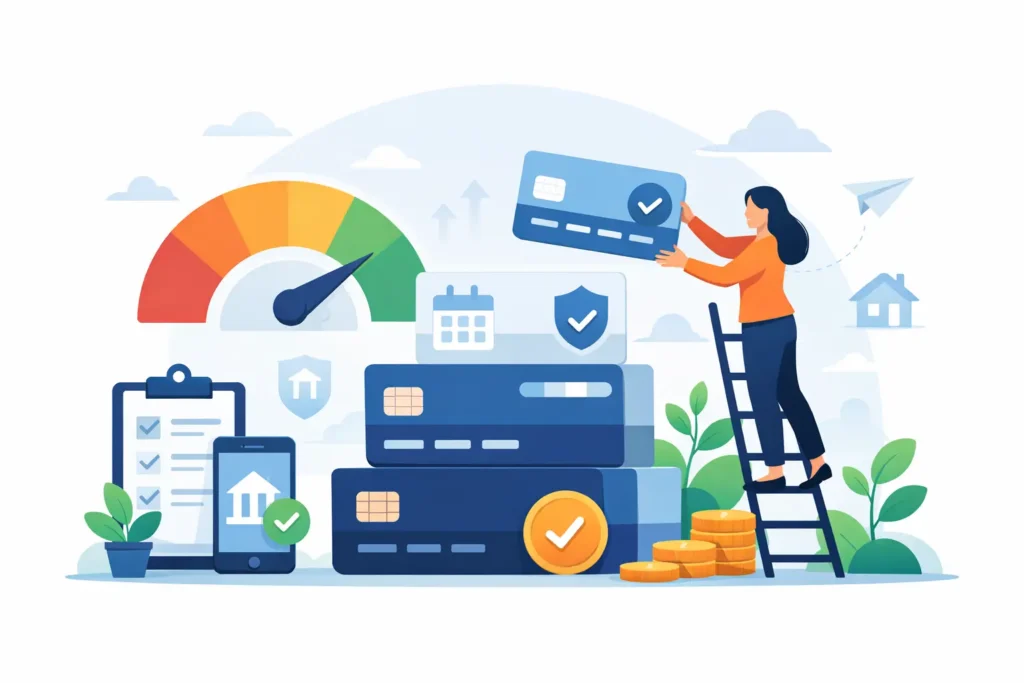
A strong payment record can make the difference between an expensive auto loan and an affordable one, or between a mortgage approval and a frustrating delay. The good news is that you can build payment history without debt that drains your budget or traps you in interest charges. The key is understanding what actually reaches your credit reports and creating a system you can maintain every month.
Payment history is one of the biggest factors in most credit scoring models. A single late payment can hurt, especially when your credit file is new or already damaged. Consistent on-time payments, however, give lenders evidence that you manage obligations responsibly.
What Payment History Really Means
Your payment history is the record of whether you paid reported credit accounts on time. Credit cards, auto loans, mortgages, personal loans, student loans, and many secured cards can report this information to the three major credit bureaus.
Not every bill you pay appears automatically. Your rent, utilities, phone bill, insurance, and streaming subscriptions may be paid perfectly for years without adding a positive account to your traditional credit report. In many cases, those bills become visible only if they are late, sent to collections, or reported through an eligible reporting program.
That is why simply paying bills on time is necessary, but it may not be enough to build credit. You need a plan that protects your existing accounts while adding positive reporting where it makes sense.
Start by Protecting the Payment History You Already Have
Before adding any new product or service, review every account already in your name. If you have an open credit card, car payment, student loan, mortgage, or personal loan, these accounts may already be helping or hurting your score.
Set every recurring payment to automatic payment for at least the minimum due. Then keep a cushion in the linked bank account so an automatic draft does not fail. Paying the full balance is better when you can do it, but preventing a late payment comes first.
A payment is generally not reported late until it is 30 days past due. Do not treat that as extra time. A late fee, a missed due date, and a 30-day delinquency are very different problems. Pay by the due date, and if you believe a payment was reported inaccurately, review the account records and your credit reports promptly.
For consumers rebuilding after collections, charge-offs, repossessions, or late payments, new positive activity matters. It does not erase accurate negative history overnight, but it can begin changing the direction of your credit profile.
Use Reported Bills to Build Payment History Without Debt
Rent reporting can be one practical option for renters. Some rent-reporting services submit eligible on-time rent payments to one or more credit bureaus. Since rent is a bill you already have to pay, this can add positive payment information without taking out a new loan.
There are trade-offs. Not every landlord participates, not every service reports to all three bureaus, and not every lender uses the same scoring model. Ask what bureau or bureaus receive the information, whether there is a fee, and what happens if a payment is late. A program that reports only one bureau may still help, but you should know exactly what you are paying for.
Some credit-report tools may also allow certain qualifying bank-account payments, such as utilities, phone service, or subscriptions, to be considered in select credit scores. These tools can be useful for someone with a thin file, but they are not a replacement for a well-managed credit account. Mortgage lenders and auto lenders may not use the same score or include the same reported data.
The smartest approach is simple: use bill-reporting options as an addition to your credit-building plan, not as the entire plan.
A Secured Card Can Work Without Carrying a Balance
A secured credit card requires a refundable security deposit, but it is still a credit card. Used correctly, it can establish positive payment history without costing you interest.
Put one small, predictable purchase on the card each month, such as gas, a grocery item, or a low-cost subscription. Then pay the statement balance in full by the due date. You are using the account, allowing it to report, and avoiding interest charges.
Carrying a balance does not build credit faster. That is one of the most expensive myths in consumer credit. Interest is the price you pay when you do not pay the full statement balance. You can show responsible use and maintain an excellent payment record while paying the card in full every month.
Keep the reported balance low as well. A card with a $300 limit should not regularly report a $250 balance, even if you pay it in full later. Credit utilization matters. Consider making an extra payment before the statement closing date so a smaller balance is reported.
Consider Authorized User Status Carefully
Becoming an authorized user on a trusted family member’s older, well-managed credit card may help your credit profile. You do not need to use the card or take on your own monthly balance to benefit from the account history in some scoring models.
This strategy only works when the primary cardholder has a long record of on-time payments, low utilization, and no signs of trouble. If they max out the card, pay late, or close the account, their problems may affect you too.
It also depends on the lender. Some lenders give authorized-user accounts less weight, particularly when reviewing a mortgage application. Treat this as a possible boost, not a complete credit-building strategy.
Be Cautious With Credit-Builder Loans
Credit-builder loans are often advertised as an easy way to establish payment history. They can report on-time payments, but they are still loans. You agree to make monthly payments, and some programs charge interest or fees.
If your goal is to avoid new debt entirely, a credit-builder loan may not be your first choice. It may be reasonable for someone who has no open accounts and can comfortably afford every payment, but do not sign up because you feel pressured to add another bill.
A low-cost secured card paid in full, rent reporting, and careful management of existing obligations may be a better fit. The right choice depends on your income, current credit report, upcoming financial goals, and ability to make every payment on time.
Watch for the Mistakes That Cancel Out Progress
Building positive history is less about finding a magic product and more about avoiding preventable damage. Keep these four habits in place:
- Pay every reported account by its due date, not when you remember.
- Keep credit card balances low compared with their limits.
- Avoid applying for several new accounts in a short period.
- Check your credit reports for late payments, collections, balances, or accounts that do not belong to you.
A high balance, a forgotten due date, or an account sent to collections can undo months of progress. Set calendar reminders even when autopay is active. Review statements for billing errors, and do not ignore mail or emails from lenders and collection agencies.
Review Negative or Questionable Information Before You Apply
If you are planning to buy a home, finance a vehicle, or seek a better credit card, review your reports well before you apply. Waiting until a mortgage lender finds a problem can limit your options and create unnecessary stress.
Credit repair is not a “credit wipe.” No legitimate service can legally remove accurate, verifiable negative information just because it is hurting your score. But inaccurate, incomplete, outdated, or questionable reporting deserves a careful review and, when appropriate, a dispute.
Paralegal Credit Fix helps consumers understand their reports, identify damaging items, and build a realistic strategy around payment history, utilization, and account management. The goal is not a quick promise. It is a cleaner, more accurate credit profile and habits that support better scores over time.
Start with the bills and accounts you already manage. Make every payment on time, add reporting only where it serves a real purpose, and avoid paying interest simply to prove you can use credit. Small, consistent actions can put you in a far stronger position when the next major financial opportunity arrives.